Know before you go: fun facts and behind the scenes interview at ‘Cirque du Soleil: OVO’
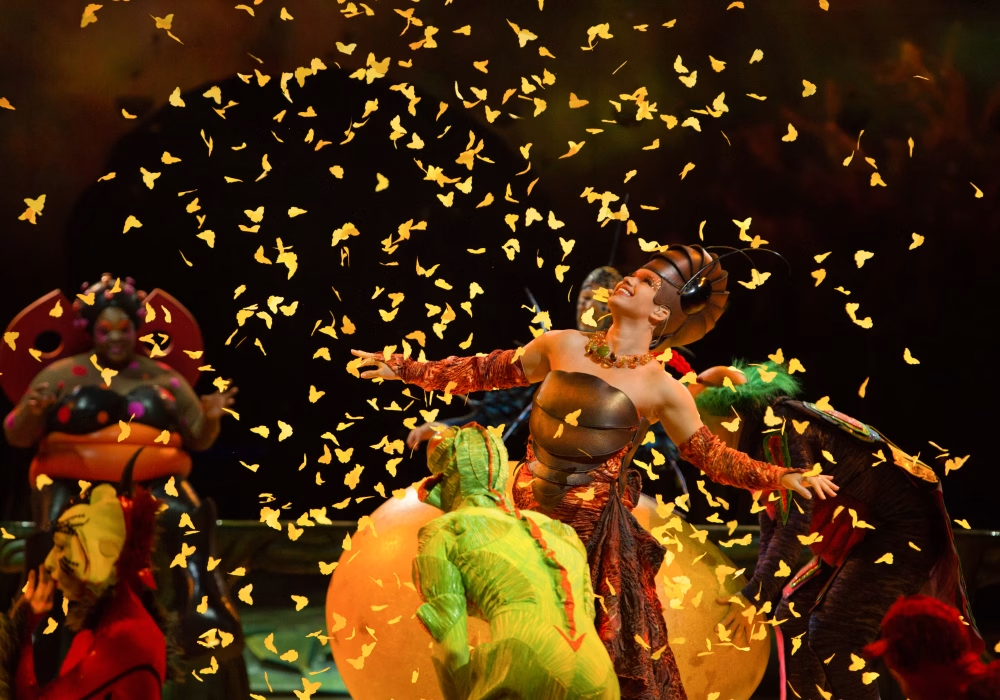
Insects can be elegant and extraordinary…and it all starts with an egg.
Cirque du Soleil: OVO continues live and in person at the Agganis Arena in Boston, Massachusetts through Sunday, July 28 before continuing in at the Amica Mutual Pavilion in Providence, Rhode Island August 1 through 4 and then at the SNHU Arena in Manchester, New Hampshire August 8 through 11. Click here for more information and for tickets.


Going behind the scenes at Cirque du Soleil: OVO, some intriguing facts were unveiled about how this tremendous production comes together. From the preparation to the performers which includes two Olympians to Liz Vandal’s kaleidoscopic costumes from Montreal, this unique production is brought to life in distinctive venues all over the world. The following are some amazing facts from Senior Publicist Janie Mallet of OVO:

- Cirque du Soleil is celebrating its 40th anniversary! OVO’s cast and crew is a multi-cultural group that has been traveling around the world since 2009. A quick paced touring production, OVO has spent fifteen years on the road changing city or country every single week. The show did break during the pandemic before returning in 2022 with a revamped production featuring new acts and new music.
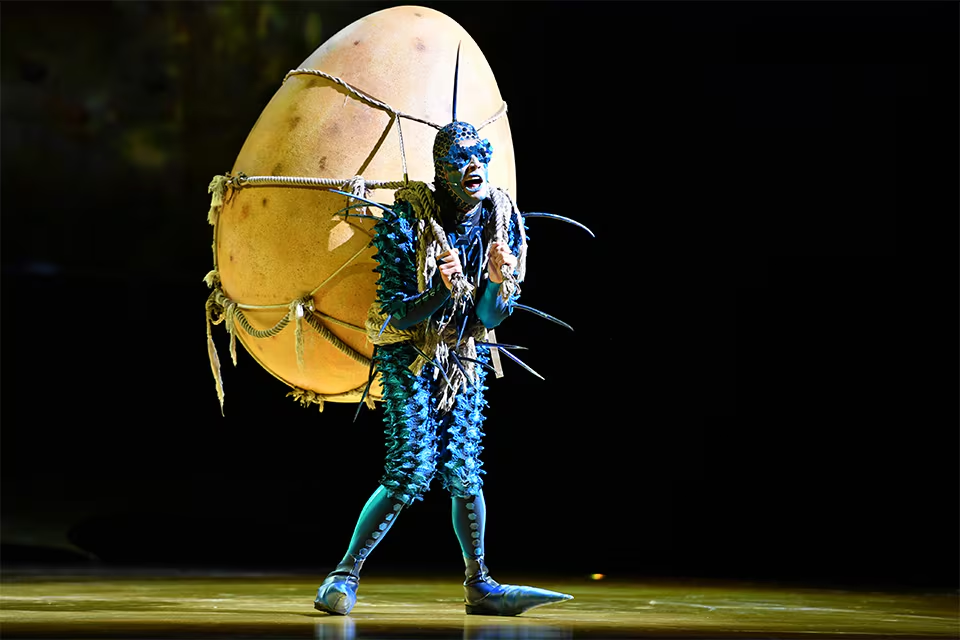
- ‘Ovo’ is Portuguese for ‘egg’. The production starts when The Foreigner arrives at this new colony of insects with an egg on his back. The show explores how we interact with one another and learn to accept and celebrate our differences. There is a love story, curiosities, and a bit of a confrontation in a world likened to a Brazilian rainforest.
- Not only does the production travel with a full gym backstage, but with a full time coach, access to nutritionists, two performance therapists, doctors and an artistic team of 100 people with 52 performing onstage.
- The artists and athletes do their own cardio, strength training, and flexibility before attending meetings and trainings for the show. The performers expend so much energy and do not follow a diet. They eat what is best for them at their own discretion, but if they want to work on a specialized thing, they have three chefs and a catering team on hand.
- The production has a lot of moving parts and the size and how the trucks are packed for the tours are different, especially if they fly across the ocean. Everything is meticulously labeled and the teams need to be ready to adapt to any last minute changes.
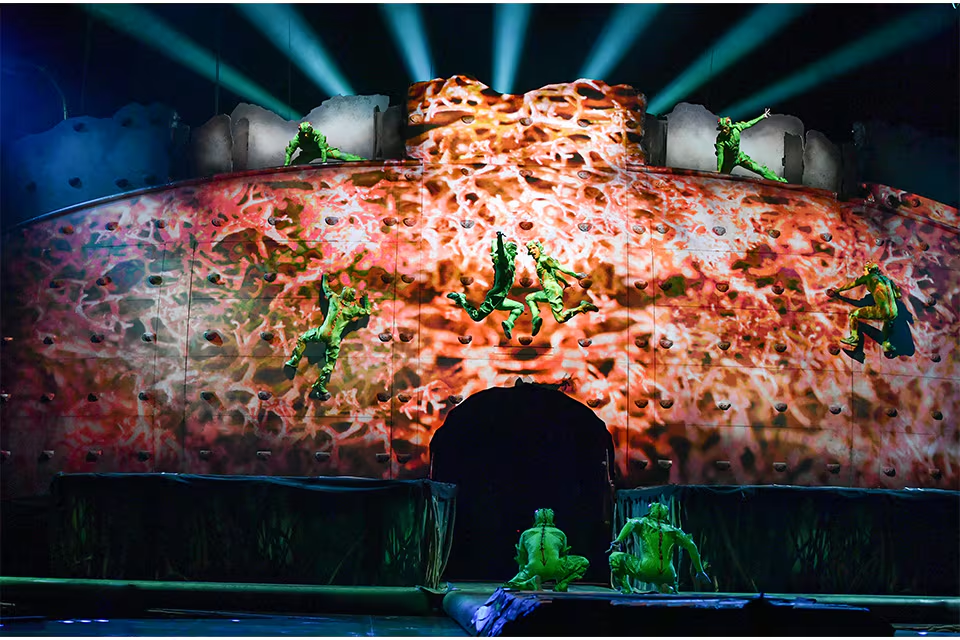
- The production has over 1000 costumes. These costumes are built for the function of each performer and there are four full time technicians on tour to take care of the costumes. All the costumes require some training in order to wear them comfortably. The clowns have larger costumes while the crickets’ costumes are light and contain a lot of stretch for performing flips and jumps. The aerial acts also have lighter costumes as they fly from one platform to the next.
- The production has six washers and three dryers that travel with them all over the world. Delicate costumes and wardrobes are dried with the fans and 60 loads of laundry are completed prior to each performance.


Gary portrays Master Flipo, the chief of the insect colony. Alongside Canadian poles artist acrobat David, they deliver some insight into their history in the circus, their favorite insects, and anticipating OVO’s opening night in Boston. In real life, Gary is from Austria and lives in Spain.

Gary: When I was 12, I decided I wanted to be a clown. I told my mom and never lost this dream. I ended up in a mime and circus school and then started to work in the circus before I joined Cirque de Soleil. They said, ‘We like your stupid face’ in 1992. I moved and did a show in Las Vegas and then back to Europe and then I’ve been here almost 7 years.
David: I started in the circus quite late at the age of 20. Usually acrobats start at a much younger age with gymnastics but at 20, I started from nothing. I saw a circus show and said that I want to do that and found out there were circus schools. I didn’t know they existed in Quebec City so I trained really hard for two years to get in because I found out that there are people all over the world who are trying to enter these professional schools. You need to already be good at something to get in and then somehow I got in. I did my three years of circus school for like 40 hours a week of training. Ever since, I’ve been in the circus and working with different circuses. I’ve been with OVO since the re-launch in 2022 with new artists and music. I’m part of the new acts.
We are very excited about the show and don’t know how the public is going to react yet, but we’re all feeling super rested because we just came back from three weeks of tour break from home. We’re very happy to be in Boston with the beautiful summer weather. We’ve met Bostonians on the street and they seem very nice.
Gary: Especially for us clowns it is very interesting in Boston to find out where they laugh and where they don’t laugh. We have to adjust the timing and are already having butterflies.
David: We toured with the show everywhere in the world. Depending on the different cultures, finding out how the audience will react is always our biggest concern.
Gary: What I anticipate sharing with the audience the most is always taking people onstage. Sometimes I have to improvise which I love and it challenges me. Generally, the whole show is a big festival of happiness. I don’t have favorites.
David: I am excited about my act just because in the living arts and in the circus there is always a bit of modification. It is never one stable show. It is thousands of versions of the show, even though it’s the same show for the public. For us, it has little changes and our act has new music, so we work on it frequently and make little changes in the choreography. It’s going to be fresh, new and exciting.
Gary: I love the jeweled beetle so I love my colors.

David: It’s a very beautiful insect.
Gary: But at the same time, I love the ladybug.

David: I really like the laced fly. The lace fly is the hair extension act and I think her costume is just brilliant and so colorful. It’s a beautiful act.
Gary: I like the crickets for the costumes. How they have an engineered costume where I always think, ‘How is it possible to move in that?’
David: Shout out to the Red Queen.

Gary: …and the clowns and the musicians.
David: OVO is really about inclusion. It’s about accepting our differences and celebrating the whole of the colony, even the cockroaches. They are all our friends. It’s sort of hard to choose one specific insect because they are all amazing.
David: The show takes years to train, but for this particular show, usually the creation of a Cirque de Soleil show is a few months. Like six months maybe and because the acrobats have been thinking about the show for a year or two, the physical preparation to get to this level takes years and years of training. Then we adapt the skills we have to the specific number and choreography that we need for the show, but it’s not like I train physically for years to be an insect. I train physically to be a circus acrobat and artist and then transfer the skills in a few months.
Gary: It’s the same thing with us…the clowns. We are being cast for that because our profile fits in it. The clown has his own profile for performing and stupidity. So I was cast because I am stupid and smart.
David: (laughs) Maybe that is also why I was cast.
Gary: (laughs) Bingo!

Cirque de Soleil: OVO continues live and in person at the Agganis Arena in Boston, Massachusetts through Sunday, July 28 before continuing in at the Amica Mutual Pavilion in Providence, Rhode Island August 1 through 4 and then at the SNHU Arena in Manchester, New Hampshire August 8 through 11. Click here for more information and for tickets.


